
Author: grdssiriwardhana
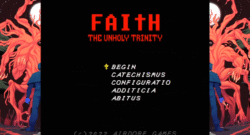
How to Survive Faith: The Unholy Trinity: A Complete Strategy Overview
1. Game Overview & Release History Faith: The Unholy Trinity is a survival‑horror anthology developed by Airdorf Games and published by New Blood Interactive, consolidating three chapters into a single retro-styled experience. Players embody Father John Ward, a troubled priest wielding only a crucifix to exorcise demons, cleanse cursed objects, and unravel a cult’s sinister machinations, all set against minimalist 8-bit visuals, rotoscoped cutscenes, lo-fi synthesized audio, and multiple branching endings. Note: The Unholy Trinity bundles all three chapters, adds new animated cutscenes, and unlocks Survival Mode once you collect every “good” ending. 2. Story & Chapters Summary Across three chapters, Faith: The Unholy Trinity follows John Ward’s descent into horror, from revisiting a traumatic failed exorcism, through nightmarish cult entanglements, to a climactic confrontation with occult forces. Each act compounds his spiritual crisis and deepens the storytelling through ambiguous dreams, moral decisions, and supernatural revelations, with branching endings that amplify emotional and replay value Chapter I Explore the forest and Martin residence as Father John Ward returns to complete a failed exorcism. Exorcise possessed objects to uncover 20 hidden notes that expand the story and foreshadow events. Navigate through the house and lure the chupacabra before ascending to the attic, where you face a final choice, i.e. shoot one of five targets (Amy, a shadowy figure, a deer, a fox corpse, or the pale monster) each triggering a distinct ending Chapter II Begin in a surreal prologue with Father Garcia’s failed exorcism, then take control of John Ward as you traverse cemetery, church, sewers, and apartment environments. New tools, i.e. sprinting, flashlight, and handgun, aid your investigation across these varied locations. Collect 22 notes while confronting tougher demons and puzzles. Your ritual decisions and actions throughout lead to one of three unique endings. Chapter III Investigate Amy’s former clinic, an apartment building, and a daycare, eventually descending into the cult’s subterranean lair. Face secret bosses and cultists while disrupting a demonic ritual. Your path leads to one of three endings, ranging from sealing the cult’s Crucible, defeating transformed Gary fused with Malphas for a redemptive resolution, or suffering damnation in the Profane Sabbath loop Warning: Skipping note collection or mishandling final choices can permanently lock you out of certain endings until a full replay. 3. Core Mechanics & Gameplay At its core, Faith uses one central tool, i.e. the crucifix, for exorcism. Hold it in cardinal directions to dispel possessed objects and demons. Each successful exorcism often reveals a new note, driving both puzzles and plot. Tip: Always scan each screen’s corners before moving on because missed notes often lie in backtracked or tucked‐away rooms. 4. Chapter Details & Endings Each chapter features multiple endings driven by final choices and collected clues. Below is a concise summary: ChapterNotes to CollectEndingsKey Final ChoiceChapter I20 objects5Final firearm target (Amy/Deer/Fox/Cultist/Monster)Chapter II22 objects3Ritual options in church & sewer bossChapter III25+ objects(varies by path)4+Sigil arrangement & boss phase order Note: Chapter III note count fluctuates based on secret puzzle items, so expect to collect 25–27 to see all variations. 5. Secrets & Survival Mode Once you’ve earned every “good” ending in Chapters I–III and completed the Chapter II prologue, Survival Mode unlocks under “Extras.” In this boss-rush, John Ward must exorcise every demon in sequence, testing your mastery of exorcism timing and movement. Unlock CriteriaTotal Demon EncountersUnique MechanicsAll good endings (Ch I–III) + Chapter II Prologue clear30+ waves (e.g., Mirror Demon ×3, Amy Phases 1–3, Michael ×10, etc.)No notes, pure reflex exorcism; progressive speed increases Warning: Some demons spawn in the same arena multiple times, so anticipate repeated patterns to avoid miss‐timed exorcisms. 6. Pro Tips & Strategies Ready to face the horrors of Faith: The Unholy Trinity with confidence? These five expert strategies will help you navigate shifting environments, exorcise demons with precision, and survive every chapter’s darkest encounters: Pro Tip: Chapter III’s underground arena contains hidden sigils that recharge your life count, so keep an eye on subtle floor markings. 7. Conclusion Faith: The Unholy Trinity remains a masterclass in minimalist horror design. By collecting every note, mastering crucifix timing, and exploring each branching path, you’ll uncover the full scope of John Ward’s torment and emerge victorious against the Unholy Trinity. Tackle one chapter at a time, complete all endings in Chapter I, then move on to II and III. Afterward, brave Survival Mode to prove your exorcist prowess and etch your name among the faithful few who have conquered every demon.

How to Master Boomerang X’s Flow State and Aerial Combat
1. Game Overview Boomerang X is a fast‑paced first‑person arena shooter developed by DANG! and published by Devolver Digital, released on July 8, 2021 for PC (Windows) and Nintendo Switch. In the game, you wield a magical, razor‑edged boomerang that serves as both your weapon and your means of movement, i.e. throw it, slingshot to it, slow down time, and chain deadly aerial attacks. The minimal narrative unfolds through environmental storytelling across mysterious arenas, while tightly tuned combat and fluid momentum create a relentlessly satisfying arcade loop Note: A free demo covers the first three arenas and transfers progress to the full game, letting you master controls risk‐free. 2. Premise & Setting You awaken shipwrecked on a mysterious, abandoned island strewn with the ruins of a forgotten civilization and haunted by creeping, inky creatures from beneath the earth. Armed with a magical boomerang, you slingshot through atmospheric arenas while piecing together the island’s dark past through fragments of environmental lore. Along the way, you encounter Tepak, a centipede-like NPC, whose sparse dialogue hints at the corruption overtaking the land. Your goal is to journey ever deeper into the forsaken depths to face the source of the nightmares that threaten to spill over the world Warning: Static positioning invites instant death because arenas feature pits, moving platforms, and environmental hazards that punish stillness. 3. Boomerang Mechanics & Movement The boomerang is your sole tool for offense, defense, and traversal. Mastering its flight and your momentum is essential to survival and speed. TechniqueInputEffectBasic ThrowLeft‐click (hold to charge)Launches boomerang; holding increases rangeRecallRight‑clickInstantly returns the boomerangSlingshotLeft‑click again mid‑airTeleports you to the boomerang’s location while preserving momentumFlux Curve Hold Shift + charge (left‑click)Slows time for precision aiming; can be toggled or made infinite via settings Tip: Chain slingshots to stay aloft because few foes can track you mid‐air. So, practice linking throws and recalls for uninterrupted aerial combat. 4. Enemy Types & Combat Counters Enemy TypeBehaviorRecommended ApproachSpiders / FliesFast-moving ground or air enemies, early-game weak threatsEasy to dispatch normally; useful for building combosJellyfish & Jellyfish SpawnersFloating enemies with shielded spawners requiring weak-point targetingDestroy spawners’ weak spots first to stop wavesTiresFast-rolling threats appearing mid-gameUse Scattershot or Needle to eliminate quicklyLlamas (Giraffe-like)Large enemies with multiple weak points; emit lightning storm hazardsHit leg or head weak points; Blaze or Scattershot helps avoid the stormShield BugsFlying enemies that shield others from harmTarget the protected enemy first or neutralize shielding bugFrogsLarge, acid-belching enemies with two weak points (back and belly)Use Scattershot, Needle, or Blaze when frog is airborneAcid Bubbles & SpawnersFloating enemies causing AoE on death or teleport when approachedAvoid dashing through; use Needle to eliminate before teleportMoths & Shielded MinionsFlying moths guarded by shield bugs, casting light pillar attackUse Scattershot to clear shields, then strike moth’s back weak pointEyeballsFast-moving laser-firing aerial enemies with back weak pointTarget from behind using Scattershot or NeedleSawblades (Small/Large)Rotating blade enemies: small are aggressive; large are stationary with multi weak pointsUse Scattershot, Needle, or Blaze depending on sizeFlaming Jellyfish & WyvernsSpeedy, dangerous enemies; wyverns have breath attacks and multiple weak pointsUse Scattershot, Blaze, or Needle to tackle quicklyMixed Waves (Resonance Engine level)All previous enemy types combined in a high-intensity arenaPrioritize threats, maintain movement, and adapt combos flexibly Pro Tip: In Endless Mode, delay Shockwave unlock until after wave 20 because its crowd‐clear strength scales best when enemy density peaks. 5. Arenas & Environmental Hazards The game features eleven active arenas plus a final boss level, Vashkatar, which itself consists of multiple waves. This totals twelve main levels As players advance, arenas introduce new enemy types, terrain features, and mechanics such as weak points, environmental hazards like lava and storms, and platforms that affect strategy and routing ArenaNotable Features / HazardsComposer’s GardenIntroductory arena; spiders and basic movement.Kenak, the Exiled TyrantAdds jellyfish and introduces mini-boss.The Grudge PitIntroduces jellyfish spawners and weak point mechanics.The Valley of the First NymphsFast-moving “tires” enemies requiring precision.YoranwoodFeatures a giraffe-like “llama” with a lightning storm hazard.The Poisoned WellContains frogs that belch poison and shield bugs.Incursion of the Great WormIncludes acid bubbles, moths, and fast projectiles.The Old VeinContains leeches and laser-firing eyeballs.Atsil’s QuarryFeatures small and large sawblades.Hall of the Ersatz FeastMix of multiple enemy types like spiders, frogs, etc.Grave of the Yoran LegionFlaming jellyfish spawners, wyverns, and fire pillars.The Resonance EngineFinal skill check with maximum enemy variety.VashkatarFinal boss with weak-point phases and arena storm damage. 6. Unlockable Abilities & Shrines AbilityDescriptionUnlock ConditionSlingshotTeleport to your thrown boomerang mid‐flightUnlocked after completing the Composer’s Garden arenaFluxSlow down time briefly while charging your throwUnlocked after defeating Kenak, the Exiled TyrantScattershotShort‑range energy blast (shotgun‑style) after a multi‑enemy throwUnlocked after completing the Grudge Pit arenaNeedlePrecise piercing shot (sniper‑style bolt)Unlocked after completing The Poisoned Well arenaBlazeFiery midair burst that explodes on landingUnlocked after completing Atsil’s Quarry arenaOblivion CometAuto‑targeting, high‑damage ultimate attackUnlocked after completing the Grave of the Yoran Legion arena Tip: Each shrine requires a performance feat (e.g., 5 consecutive slingshots or 10 aerial kills) to unlock, so track your combo meter to farm crystals efficiently. 7. Game Modes, Achievements & Replay Value Note: Endless Mode features its own score multiplier system (×1–×4), rewarding kill streaks with bonus points; multiplier resets on death but not impacted by Flux slow‐mo. 8. Advanced Strategies & Pro Tips 9. Conclusion Boomerang X redefines arena shooters by weaving momentum‐based traversal directly into combat. By mastering boomerang physics, slingshot chains, and shrine-unlocked abilities, you’ll tame each arena and rise atop global leaderboards. Aim for gold medals on all Time Trials, then dominate Endless Mode leaderboards. Tackle Custom Challenges to refine each upgrade’s niche, and revisit community forums for monthly high-score events.

Death’s Door Guide to Reaping Souls and Unlocking Night Mode
1. Game Overview Players control a crow reaper tasked with collecting souls in a bureaucratic afterlife. The narrative unfolds as the crow’s assigned soul is stolen, leading to a journey through various realms filled with puzzles, combat, and exploration. The game features isometric gameplay, drawing inspiration from titles like The Legend of Zelda and Dark Souls, and offers a blend of challenging combat, environmental storytelling, and a unique art style. Note: The mobile port on Netflix includes touchscreen controls and six total health points instead of four. 2. Story & Themes You are a fledgling crow employed by the Reaping Commission, an office-like afterlife bureaucracy. Your first assignment goes awry when your target’s soul is stolen by an enigmatic figure. Tasked with reclaiming the three “Giant Souls” required to open Death’s Door, you traverse three dungeons and gradually uncover a conspiracy surrounding the Lord of Doors, the very overseer of soul collection. Warning: Narrative fragments appear in scattered journals and environmental details, so missed notes may obscure lore until you replay or consult guides. 3. Core Mechanics & Combat The combat loop hinges on two primary tools: a melee sword and a ranged bow/spell system. Melee combos generate ammo for your bow and spells. Early on, you wield a basic sword and arrow; four additional weapons and three magical projectiles open up as you progress. Health is measured in discrete points, recoverable only by planting Life Seeds in pots, which then grow into heal-all plants. Tip: Chain a roll into a quick slash to replenish your magic or arrows mid-fight, critical for sustained DPS against bosses. 4. Weapons & Abilities You begin with a basic sword and bow; hidden doors marked by magic icons lead to secret minibosses who upgrade your spells and weapons. Upgrades grant burn damage, area-of-effect blasts, free hookshots, and explosive utilities, but your core attack patterns remain consistent throughout. ItemUpgrade EffectAcquisitionFlame SpellAdds burn-DoTDefeat Silent Servant miniboss in MausoleumBomb SpellNo self-damage, increased radiusSecret room in Overgrown Ruins, Silent Servant bossHookshotAllows grapple and swing attacksUrn Witch’s Estate shrine minibossIce SpellSlows enemies on hitClockworks area, defeat special miniboss 5. Level Design & Exploration Death’s Door features a hub-and-spoke design. The Hall of Doors serves as your central warp station. Three major realms branch off, each containing two to three dungeons. With no in-game automap, you rely on environmental landmarks and journal-collected clues to navigate. Tip: Smash every crate and statue because secret paths and Shiny Things often hide behind destructible scenery. 6. Boss Battles & Strategies Seven major bosses and multiple secret minibosses test your mastery of sword, spells, and dodge rolls. Each boss telegraphs attacks with distinct animations, so learning these tells is crucial to survival. Full breakdown BossPhasesKey StrategyDemonic Forest Spirit1. Tentacle Sweeps2. Tentacle Charge3. Tentacle Charge + Tentacle SweepRotate counter-clockwise to avoid sweeping tentacles; strike during breaks and stay mobile.Guardian of the Door1. Three-hit Combo2. Laser Barrage3. Missile BarrageUse bow to keep distance; dodge its spinning melee attack, homing laser in phase two, and missiles later.Urn Witch1. Urn Toss2. Urn Stomping3. Urn SpiralDeflect green orbs, dodge hopping attacks, strike during spiral phase. Use Fire Spell to stun her inside pot for free hits.Frog King1. Pogo Jump2. Inhalation3. Mace ResetWhen he pogo-jumps, strike his back to knock him in water. In 2nd phase, shoot his glowing mace to regenerate floor tiles and continue punishing when safe.Betty the Yeti1. Fist Slams2. Rolling Attack3. Snowball BarrageBeware her rolling barrages and ground-pound combos. Watch for snowball shadows indicating incoming strikes.Grey Crow1. Chain Whip2. Shadow Crows3. Void PullDon’t overcommit. Hit the crow to spawn projectiles and reflect them back to deal damage.Lord of Doors / The Last Lord1. Three-hit Combo2. Bull Hallway3. Hookshot Gauntlet4. Pillar Slam5. Roll Attack6. Final ShowdownNavigate the gauntlet (dodging bulls, using hookshot), then learn and counter protocols from previous bosses, i.e. laser, urns, rolls, staying patient is key.Spell‑Upgrade Minibosses (Black Knight et al.)1. Spell-specific AttacksUse the corresponding spell (e.g., Bomb for bomb‑upgrade boss), dodge, and be patient, not greedy to secure your upgrade Tip: Roll into invulnerability frames for frame-perfect dodges, then counter with charged attacks during recovery windows. 7. Stats & Upgrades Soul currency spent at Hall of Doors on four stats: Strength, Dexterity, Haste, and Magic. Each costs increasing amounts (400→1500 souls per point). Community consensus ranks Haste and Strength highest for new players, followed by Magic and Dexterity for specialized builds. StatPrimary BenefitCost ProgressionHasteFaster movement & roll cooldown400 → 600 → 800 → 1000 → 1500 soulsStrengthIncreased melee damage & swing reach400 → 600 → 800 → 1000 → 1500 soulsMagicBoosts spell damage400 → 600 → 800 → 1000 → 1500 soulsDexterityFaster attack & charge speed400 → 600 → 800 → 1000 → 1500 souls Note: Save 1,500 souls for your final upgrade because you’ll get maximum return when your core build is established. 8. Secrets & Collectibles Hidden content abounds: 24 Shiny Things (lore fragments), 10 Tablets of Knowledge (night mode puzzles), secret minibosses, and color variant weapons. Collecting all Shiny Things and Tablets unlocks the true ending and bonus cutscenes. Warning: Some secrets only appear in night mode, so switch to night via Rusty Belltower Key after your first full completion. 9. Pro Tips & Endgame After the credits, switch to night, solve all Tablet puzzles, and revisit every region to collect hidden Tablets. True ending plays only once, so plan your runs to avoid missing late-game content. Pro Tip: Use life-seed mapping checklists from Polygon’s guide to avoid frustration because pots never respawn once filled! 10. Conclusion Death’s Door masterfully marries tight Souls-influenced combat with Zelda-style puzzles and a hauntingly bureaucratic narrative. By following our guide’s verified insights, you’ll slash every foe, collect every secret, and unlock the ultimate truth behind the Reaping Commission’s darkest schemes.

How to Master Dreamscaper’s Dual‑Cycle: Dreamscapes and Waking World
1. Game Overview Dreamscaper is an isometric action roguelite from Afterburner Studios, where each night you battle vivid nightmares in a shifting, memory infused dungeon, then return by day to the town of Redhaven to forge relationships, gain permanent upgrades, and unravel Cassidy’s story. Thus, capturing a compelling “Dream. Die. Wake. Repeat.” loop. Note: Each dream session randomizes level layouts, enemy spawns, and keepsake drops, so embrace the chaos to build Cassidy stronger each day. 2. Story & Themes You play as Cassidy, a quiet and introspective young woman who has moved to Redhaven to explore and heal from her emotional struggles. Her suppressed fears, like isolation, self doubt, and negativity manifest as deadly nightmares each night. Throughout her dreamscapes, she collects Keepsakes (which provide temporary buffs during a run) and Memories (fragments of her past that build Inspiration) to empower her waking self. As Cassidy forges friendships through crafted gifts and conversations, she strengthens relationships that grant persistent “Influences” to help dispel the darkness haunting her life. Breakdown of details: Warning: Some Memories unlock only after specific friendship thresholds, neglect daytime bonds and miss powerful Keepsakes or upgrades. 3. Dual-Cycle Gameplay: Dream & Waking World Dreamscaper alternates between two modes: CurrencySymbolDaytime UseResolveTear dropMeditation at Taylor Park to permanently upgrade Cassidy’s stats (like HP, Lucid capacity, parry, etc.)InspirationLightbulbCrafting gifts for NPCs to build friendships and unlock bonusesSparksFlame iconSketching at Caspecci Café to unlock weapons, Keepsakes, and other dream itemsGlassSphere icon Daydreaming at the Silk Lounge to unlock dreamscape modifiers (e.g., special rooms, merchant reroll, enchantments) 4. Combat Mechanics & Weapon Classes Dreamscaper’s combat rewards fluid movement, precise timing, and combo chaining. Each melee weapon class and ranged subtype plays distinctly, but all share these fundamentals: TypeExamplesRoleHeavy MeleeGreatswords, HammersSlow but high-damage strikesLight MeleeDaggers, Yo‑YosFast, combo-oriented weaponsProjectile RangedBow, ThrowablesKeep enemies at a distanceLucid/ElementalFirebird, Ice SpikeArea-of-effect or status-based action 5. Lucid Powers & Elemental Interactions “Lucid Attacks” are powerful abilities Cassidy uses during dreams, each with unique effects; several tie into elemental statuses that can trigger critical extinguish reactions when layered with other elements AbilityElementEffectCold SnapIceFreezes enemies, then shatters them upon activationRain of BladesWindHoming blades, high DPSOptic SearFireLine-of-sight beamBlack HoleVoidPulls enemies to center Tip: Chain elemental combos, e.g. wind then fire to trigger “critical extinguishes” (double damage) against status afflicted nightmares. 6. Keepsakes & Daytime Currencies Keepsakes are temporary relics found within Dreamscapes. They provide run specific passive bonuses such as Vampire Fangs (life steal on hit), Fire Bird (revive once during a run), and Snowman (freeze on hit) but are lost upon returning to Redhaven. More Keepsakes can be unlocked between runs using Sparks via the Sketchbook at the Caspecci Café. 7. Upgrades: Meditation, Daydream, Sketching & Crafting Spend your four currencies each morning to reinforce Cassidy permanently. CategoryCurrencyKey UnlocksMeditationResolve+1 HP per point; +5% Lucid Regen; +10% crit chanceDaydreamingGlassMerchant Reroll; convert Waking Currencies to Sand; unlock QoL modsSketchingSparksNew Weapons; Keepsakes; special loadout slotsCraftingInspirationGifts to raise NPC bonds; unlock story events Early priority: unlock 1) Meditation HP, 2) Daydream Merchant Reroll, 3) Sparks for top tier Keepsakes. 8. Map Structure & Exploration The Dreamscape is made up of procedurally generated floors with randomized rooms, each run challenges you to adapt as you navigate toward the boss at the end of a floor. 9. Boss Battles & Advanced Tactics Each of the six nightmares culminates in a unique boss embodying a core fear (Fear, Isolation, Regret, Resentment, Negativity, Loss). Key strategies: 10. Pro Tips & Endgame Strategies Pro Tip: Record runs to analyze boss phase transitions, frame perfect rolls separate victory from defeat. 11. Conclusion Dreamscaper fuses tight ARPG combat, roguelite replayability, and heartfelt social sim depth. By mastering dual cycles, prioritizing permanent upgrades, and stacking elemental combos, you’ll conquer Cassidy’s nightmares and discover every hidden Memory. Unlock all Keepsakes via Sparks farming, max out Meditation and Daydreaming tiers, then tackle Intensity 8 for ultimate meta currency gains. Dive into community leaderboards and mod forums for fresh challenge runs. Sweet dreams, and sharper boomerangs await.

Humor and Horrors of Hell Pie: Exploring Toilet Humor, Feces Nazis, and Shock-Value Jokes
1. Game Overview & Release Info Hell Pie is an absurd, gross‑out 3D platformer from German indie studio Sluggerfly, published by Headup Games, in which you control Nate, the self‑proclaimed “Demon of Bad Taste” as he scours bizarre and shockingly twisted realms to gather Satan’s birthday pie ingredients, aided by Nugget the angel who doubles as a grappling hook and melee weapon. Its satirical, over‑the‑top humor, paired with fluid traversal and collectathon gameplay across four warped worlds, delivers a shock‑trope twist on classic mascot platformers Note: A free PC demo unlocks your progress in the full game after completing the first three hub worlds. 2. Premise & Setting You play as Nate, the self‑proclaimed Demon of Bad Taste, who unexpectedly receives a phone call from Satan and is tasked to collect vile ingredients for his birthday pie. Partnered with Nugget, a cherub chained to Nate, you swing him as both a grappling hook and melee weapon to traverse the game’s grotesquely twisted environments 3. Core Mechanics & Combat Hell Pie blends tight platforming with basic combat rooted in Nugget driven aerial mobility. While enemy encounters are minimal, the real depth lies in movement progression through upgrades and horns ActionInputEffectJumpSpacebar / AStandard vertical leapSwing NuggetLeft Click / XAttack & swing mechanicGrapple HookPress when Nugget thrownTeleport to Nugget’s locationEquip HornD‐Pad Left/RightActivate horn ability 4. Progression & Horn Abilities Progression centers on unlocking five horn powers by sacrificing Unilambs found at shrines within hub worlds. Each horn grants a unique traversal utility accessible through the horns menu HornEffectUnlock MethodSprint HornSprint dash on ground and in mid-airSacrifice Unilamb in Sashimi BayRam HornSmash through breakable walls and enemiesSacrifice 7 Unilambs in Sashimi BayArm HornZipline glide & reach distant platformsSacrifice 10 Unilambs in JungleLight HornIlluminate dark areas and activate light gates Sacrifice 10 Unilambs in Flavor PeaksWing HornGlide (with occasional jump boosts)Sacrifice 18 Unilambs in Pearly Gates Tip: Follow VulgarKnight Reviewer’s horn order: Radar → Sprint → Ram → Arm → Light → Wing, prioritizing mobility and secrets detection. 5. Worlds & Level Design Four main hub worlds each contain distinct themed levels, mini quests, and a unicorn sacrifice shrine. Levels loop back for ingredient hunts or horn challenges. WorldThemeKey FeatureSin IncCorporate office hellConveyors & office cubicle platformsSashimi BayAnthropomorphic sewersToxic water & hidden bridge swingsFlavor PeaksCandy meat factoryMoving machinery & meat conveyorsJungleExcessive pleasure clubVine swings & rotating platformsPearly GatesMain hubShops, horn tutorials, cosmetics storeHellFinal gauntletDeath traps & final ingredient boss arenas 6. Collectibles: Candy Meat, Cats & UniLambs Three primary collectible types drive full completion, each tied to specific unlocks and achievements: TypePer WorldEffectCandy Meat Varies per area (20-25)Unlocks Nugget’s upgrades (like mid-air swings); not tied to healthLucky CatsMultiple per world/hubUnlock rooms & bonuses in Greed’s chamber, such as costumes and challengesUniLambsTypically one per sub-levelSacrificed at altars to unlock horn abilities 7. Secrets & Hidden Challenges Hell Pie peppers in unlockable mini games and bonus areas that reward skill and curiosity. 8. Difficulty & Progression Systems Hell Pie’s difficulty curves gently; combat is trivial, focusing challenge on platforming and secret hunts. 9. Advanced Strategies & Pro Tips These expert insights streamline your Hell Pie mastery: Pro Tip: In Disco Laser, don’t overthink, it’s easier without sprint horn; standard jumps clear the pattern faster. 10. Conclusion Hell Pie delivers a uniquely twisted platforming experience, trading combat depth for over-the-top traversal and hideous humor. So, by following this guide to collect every candymeat, unlock horns in optimal sequence, and explore every hidden corner, you’ll bake Satan’s most revolting pie and savor every filthy laugh along the way. Start your run in Pearly Gates, unlock Nugget, farm candymeat for two swings, then prioritize Radar and Sprint horns before diving into deeper worlds. Embrace the filth and swing with flair!

How to Build Meta Progression in Shovel Knight Pocket Dungeon Game
1. Game Overview Shovel Knight Pocket Dungeon is a genre-blending puzzle roguelite where you guide Shovel Knight (and unlockable heroes) through an 8×8 grid dungeon, attacking enemies by bumping into them and strategically managing falling blocks, potions, and relics. Every move shifts the board downward, creating a high-stakes, fast‑paced experience that rewards clever planning and speed. Praised for its innovative mechanics, charming presentation, and replay value, the game has earned strong critical acclaim across platforms Note: A free demo covering the first three dungeons carries over progress to the full game, thus letting you master the grid mechanics risk-free. 2. Story & Premise You are drawn into the mysterious Pocket Dungeon, a cube-shaped artifact that imprisons those who touch it. Guided by Puzzle Knight, you must navigate an 8 × 8 falling‑block grid, bumping into enemies to defeat them, collecting items and key fragments, recruiting other trapped knights, and striving to escape. If you defeat the Pocket Dungeon Master (Puzzle Knight) without all four key fragments, you escape alone; but if you collect all fragments in a single run, you access a secret area and face additional bosses, culminating in the True Ending. The tone blends retro charm, Shovel Knight’s signature humor, and modern roguelite twists. 3. Core Mechanics & Puzzle Combat Each dungeon is an 8×8 grid that fills from the top with enemies, obstacles, items, and potions. Moving your knight shifts all tiles one row, and colliding with foes initiates combat, thus simultaneously dealing and receiving damage. Chains form when matching like-type tiles, amplifying damage and rewards. Survive until the doorway appears to progress, or clear all on-screen enemies before exiting for bonus rewards. Tip: Target weaker enemies first to build large chains, then unleash powerful chain attacks for maximum gem gains and safety. 4. Characters & Unlocking Shovel Knight Pocket Dungeon features 13 playable knights, each unlocked by defeating them as dungeon bosses or via special shrine portals. Shovel Knight is available from the start; others require specific dungeon encounters or key conditions. KnightUnlock MethodShovel KnightDefault starting characterKing KnightDefeat him in Lich Yard boss fightSpecter KnightDefeat him in Lich Yard boss fightPlague KnightDefeat him in Lich Yard boss fightMole KnightDefeat him in Chromatic Caverns boss fightTreasure KnightDefeat him in Chromatic Caverns boss fightTinker KnightDefeat him in Chromatic Caverns boss fightPolar KnightDefeat him in Flying Machine boss fightPropeller KnightDefeat him in Flying Machine boss fightScrap KnightDefeat him in Flying Machine boss fightPrism KnightDefeat her in Scholar’s Sanctum boss fightBlack KnightEnter 3rd Shrinemaster portal (20 000 gems)Shield KnightEnter 1st Shrinemaster portal (3 keys) Once unlocked, knights retain their unique abilities, such as chaining bonuses, HP recovery, or special attacks through subsequent runs. 5. Items & Relics Items are limited-use power-ups,like Potions (heal), Turkey (large healing), Spears, Shields, Bombs, Ice/Flame Axes, Troupple Chalices, Chronos Coin (time stop), Wildcard (clear matching foes), and more, found in dungeons through chests or by bumping into them. Relics are passive enhancements (e.g. increased chain damage, shield boosts, HP bonuses) acquired mid-run via Chester’s shop, Glitzem’s game, or Shrine portals. Both items and relics carry forward between dungeon floors during the same run, but death or returning to camp resets them, i.e. only gems and progress such as unlocked knights and relics in the pool persist. Purchasing relics at camp makes them available for future runs, but doesn’t grant their effect immediately Pro Tip: On boss levels, clear adds first then chain attack the boss’s weak phase for safe, high-value combos. 6. Dungeons & Exploration The game features ten primary dungeons, eight story levels and two boss arenas, each with unique themes, hazards, and challenges. Clearing certain levels or collecting key fragments unlocks the final Tower of Fate dungeon. StageThemeNotesPlainsGrasslandsIntro dungeon, simple layoutsPridemoor KeepCastle corridorsTraps & respawning foesLich YardGraveyardFirst boss encounters (King, Specter, Plague)Magic LandfillJunkyard with magic hazardsEmergent block obstaclesIron WhaleSteampunk shipConveyor beltsChromatic CavernsCrystal cavesMulti-chain potentialClockwork TowerGear-filled towerPuzzle lifts & pistonsStranded ShipShipwreckWater slowdown effectScholar’s SanctumLibrary ruinsPuzzle Knight boss fightTower of FateFinal gauntletRequires all key fragments 7. Progression: Gems & Camp Upgrades Gems serve as the main currency, acquired by defeating enemies, chaining combos, and opening chests. At Camp, they can be spent on: These expenditures enable persistent meta-progression, making future runs smoother and more varied by unlocking shortcuts, relic access, and customization option 8. DLC: Puzzler’s Pack & Paradox Pack Yacht Club Games committed to post-launch support with multiple DLC packs: 9. Modes: Adventure, Versus, Daily & Endless Shovel Knight Pocket Dungeon offers multiple ways to play beyond the main Adventure Mode: 10. Advanced Strategies & Pro Tips 11. Conclusion Shovel Knight Pocket Dungeon reimagines puzzle matching as an action-packed roguelite, rewarding strategic chains and persistent progression. Thus, with a rich cast of knights, deep item and relic systems, and ongoing DLC support, it offers limitless replayability. Use these insights to optimize your runs, unlock every character, and conquer both the true ending and Endless Mode’s top leaderboards. Complete Adventure Mode to unlock all DLC, then refine your meta-build with relics and high-chain strategies. So, dive into Daily Challenges for fresh puzzles and test your skills in Versus and Endless Mode. Happy digging!

A Comprehensive SteamWorld Build Guide: Optimize Your Town and Underground
1. Game Overview SteamWorld Build is a charming hybrid of city-building and dungeon management set on a dying planet, where you grow a Steambot mining settlement while venturing underground to unearth ancient technology to escape, thus offering an accessible, visually appealing experience with intuitive surface gameplay and strategic underground exploration Note: A free demo covers the first three dungeons and carries your progress into the full game on PC and consoles. 2. Story & Setting At length, the game runs parallel to SteamWorld Dig 2. Jack Clutchsprocket and his daughter Astrid lead a group of refugees to an abandoned mine on a dying planet, seeking parts to assemble a rocket and escape. Guided by the mysterious bot Core, who is eventually revealed as part of the Vectron Hivemind, you rebuild a surface settlement, restore the mine, and uncover Core’s betrayal. Along the way, the helpful Trader bot gives his life to allow you to flee. Premise: Construct a thriving mining settlement, restore the mineshaft, and delve into dangerous depths for long lost rocket technology to escape the dying world. Key Characters: Tone: A steampunk–western frontier infused with lighthearted humor, resource management challenges, and growing emergent threats lurking in the underground darkness. 3. Core City-Building Mechanics Above ground, you design and manage a town using buildings and roads, all arranged along and connected to the central Train Station. Your population of steambots, i.e. Workers, Engineers, Aristobots, and Scientists perform tasks, generate resources, and keep your settlement growing while servicing ever‑increasing needs and challenges. Tip: Use the Move Tool to reorganize buildings, i.e. roads and service radii change town efficiency drastically when you unlock crowded expansions. 4. Dungeon Exploration Mechanics Repairing the Abandoned Mineshaft unlocks access to underground exploration, enabling Engineers, Miners, Prospectors, Mechanics, and Guards to venture across procedurally structured mine floors to extract resources, fend off dangers, and retrieve items vital to your town’s growth and rocket building plans. 5. Steambot Tiers & Milestones Your town’s growth is tracked through 19 official Milestones tied to steambot population and progression. Thus, each milestone unlocks new building types, residences, and gameplay/story elements, culminating in building the Rocket Fuel Processing Plant and launching the rocket as the final escape goal TierMilestone & Population RequiredUnlocksWorkersMilestone 1 – 24 WorkersMilestone 2 – 70 WorkersMilestone 3 – 120 WorkersMilestone 4 – 200 WorkersWarehouse, Forester, Lumbermill, Service Shop (Milestone 1)Cactus Farm (Milestone 2)Charcoal Kiln, Train Station (Milestone 3)Unlock Engineer residencies (Milestone 4)EngineersMilestone 5 – 1 EngineerMilestone 6 – 70 EngineersMilestone 7 – 120 EngineersMilestone 8 – 200 EngineersMilestone 9 – 240 EngineersMineshaft access, Sand Sifting Factory, Glassblower, Moonshiner, Saloon (Milestone 5)Prospector recruitment, Toolmaker, Surveyor’s Office, Paved Roads (Milestone 6)Mechanic recruitment, Mechanic Quarters, Scrap Extractor, Pickaxe Maker, Sheet Metal Factory (Milestone 7)Surveillance Facility, Radar, Bridges, Water Purifier, Wash Service, Burger Meister, Cattle Farm (Milestone 8)Aristobot residencies, Ironium Extractor (Milestone 9)AristobotsMilestone 10 – 1 AristobotMilestone 11 – 80 AristobotsMilestone 12 – 120 AristobotsMilestone 13 – 180 AristobotsMilestone 14 – 240 AristobotsPolymerisation Plant, Waxing Shop (Milestone 10)Armory, Guard Quarters, Oil Extractor, Oil Refinery, Diesel Plant, Hatmaker, Glass Wool Spinner, Thumper, Sheriff’s Office (Milestone 11)Fine Dining, Steam Furnace, Carburizing Plant (Milestone 12)Casino, Gunsmith, Black Powder Maker, Sulfur Distillery, Flame Turret, Gas Extractor (Milestone 13)Unlock Scientist residencies (Milestone 14)ScientistsMilestone 15 – 1 ScientistMilestone 16 – 50 ScientistsMilestone 17 – 100 ScientistsMilestone 18 – 150 ScientistsMilestone 19 – 240 ScientistsUniversity, Retrofit Shop, Maglev Road (Milestone 15)Lab Equipment Manufacturer, Sparkling Diesel Manufacturer, Lightning Turret (Milestone 16)Art Studio, Oil Paint Factory, Large Stuff Collider, Vectron Scrap Extractor (Milestone 17)Observatory (Milestone 18)Jetshroom Farm, Rocket Fuel Processing Plant (Milestone 19) Tip: Final Escape (Post‑Milestone finale): After Milestone 19, you must produce 100 units of rocket fuel at the Rocket Fuel Processing Plant to launch the rocket and complete the game, this completion step isn’t numbered as a milestone but is the final objective 6. Items Boost your town’s productivity and dungeon success with Items (temporary consumables) obtained via the Train Station or treasure chests and equip them to buildings or Steambots for targeted enhancements. 7. Mine Workers & Underground Systems Below ground, four specialized steambot classes expand your operational capabilities in the deeper shafts, with a fifth introduced in the Mechanized DLC: 8. Difficulty Levels & Game Modes Customize your experience with four difficulty settings and useful game toggles: Optional Toggles (available alongside difficulty choices): 9. Advanced Strategies & Pro Tips Pro Tip: Fast-track early milestones by focusing on Worker housing and Foresters, so unlock your first Mine repair quickly to gain gem income from below. 10. Conclusion & Next Steps At length, SteamWorld Build innovates the SteamWorld formula by blending intuitive city building with deep dungeon crawling roguelite loops. So, by mastering town layouts, worker progression, milestone milestones, and item relic systems, you’ll build an escape rocket and outsmart the Vectron Hivemind. This guide’s verified insights ensure you build smarter, dig deeper, and climb every leaderboard. Complete Adventure Mode on Balanced to unlock full DLC, then tackle Endless Mode for meta-currency farming. Refine item builds in the Daily Challenge and challenge friends in Versus. Your steambots are counting on you, happy building!

How to Haggle Wisely and Boost Popularity in Potion Craft: Alchemist Simulator
1. Game Overview Potion Craft is a charming medieval-style alchemy management sim where you physically manipulate ingredients, i.e. grinding, stirring, heating and chart their effects on an alchemy map, inventing new potions through exploration and experimentation. As you craft and customize your shop, you serve unique townsfolk, build your reputation, and guide the course of your alchemical journey 2. Core Brewing Mechanics The brewing process unfolds in three main phases, i.e. grinding in your mortar & pestle, stirring in the cauldron, and heating with the bellows to imbue effects, followed by bottling to finalize the potion. Tip: Partially grinding ingredients can produce hybrid effects, so experiment with grind lengths to discover unique potions. 3. Ingredients & Potion Effects Ingredients fall into four primary categories, i.e. herbs (including roots, berries, flowers), mushrooms, minerals, and salts. Each ingredient contributes an effect rune when used, and combining them lets you craft multi-effect potions, with higher potency yielding tiered quality based on map alignment. Effects and their base prices (gold) for top-tier effects include: PotionBase Price (Gold)Necromancy2370Luck1700Anti-Magic1540Inspiration1400Levitation1320 Crafting higher tier (Tier II/III) effects multiplies these base prices (×1.75 for Tier II; ×2.5 for Tier III) and requires precision in aligning the potion marker on the alchemy map. 4. Alchemy Map & Machine The alchemy map is a network of runes; each symbol links to a specific effect. Grinding and stirring moves your potion avatar along these nodes, enabling complex recipes. Despite community speculation, no physical upgrades exist for mortar, spoon, or bellows, only the advanced alchemy machine receives future content updates for new salts and stones. 5. Shop, Haggling & Reputation Customers present requests with effect icons and quality tiers. They offer a base price, which you can accept, refuse, or haggle. Refusing shady deals raises your reputation; accepting them nets quick gold but lowers reputation. Keep reputation between 75–90 to attract premium clients without stagnating your shop’s income flow. 6. Recipe Discovery & Experimentation Finding new recipes indeed requires exploring ingredient combinations on the alchemy map. You have a total of five slots per brew, each effect’s tier occupies a number of slots (Tier I = 1, II = 2, III = 3). If you exceed the capacity, the potion cycles out the oldest effect(s) to accommodate new ones. 7. Advanced Strategies & Pro Tips Level up your alchemy with these proven strategies, from talent upgrades to map mastery, that elevate your brewing both efficiently and profitably: 8. Achievements & Endgame All 29 achievements are designed to be accessible and rewarding, with clear objectives and no missable content. Completing all achievements typically takes between 30 and 35 hours, depending on individual play style and efficiency. However, players should be aware of specific requirements for certain achievements and potential save system quirks that may affect achievement tracking. Here’s a list of the rarest achievements and the most efficient way to snag them: 9. Conclusion & Next Steps Potion Craft: Alchemist Simulator combines tactile brewing puzzles with savvy shopkeeping. By mastering grind-stir-heat cycles, mapping runic paths, optimizing your shop’s reputation, and exploring hybrid recipes, you’ll become the realm’s preeminent alchemist. Experiment with partial grinding for hidden effect maps, maintain reputation near 85, and focus on high‐base‐price tier‐III potions once Philosopher’s Salts arrive. Keep an eye on patch notes for new machine content and ingredient expansions.