
Author: cheena

Inbuilt Maps and Rule-Based Algorithms Revolutionize Drones and Driverless Vehicles”
In a groundbreaking development, students from Visvesvaraya National Institute of Technology (VNIT) have made significant strides in advancing the capabilities of drones and driverless vehicles. Their innovative technology integrates inbuilt maps and rule-based algorithms, propelling these autonomous machines to new heights of efficiency and safety. The integration of inbuilt maps and rule-based algorithms has been a critical challenge in the realm of autonomous transportation. VNIT students have successfully overcome this challenge, opening up a world of possibilities for the future of transportation technology. Enhancing Navigation through Inbuilt Maps One of the key components of this technology is the utilization of inbuilt maps. Drones and driverless vehicles rely heavily on precise navigation, which is often achieved through the use of GPS and satellite data. However, these methods have limitations, especially in environments where signals may be weak or unavailable. VNIT students have developed a solution by incorporating detailed inbuilt maps into the vehicles’ systems. These maps are created through a combination of advanced mapping techniques, LiDAR (Light Detection and Ranging) technology, and computer vision. As a result, the vehicles can navigate with greater accuracy and adaptability, even in challenging terrains or areas with poor GPS signal coverage. Rule-Based Algorithms for Real-time Decision Making In addition to inbuilt maps, VNIT students have implemented rule-based algorithms that enable drones and driverless vehicles to make real-time decisions. These algorithms are designed to mimic human-like decision-making processes, allowing the machines to respond to unexpected obstacles or changing road conditions swiftly. The rule-based algorithms consider a variety of factors, such as vehicle speed, traffic patterns, weather conditions, and pedestrian movement. This comprehensive approach ensures that autonomous vehicles can adapt to various scenarios effectively, prioritizing safety and efficiency. Benefits for a Wide Range of Applications The integration of inbuilt maps and rule-based algorithms has far-reaching implications across various industries. Some of the notable benefits include: VNIT students’ innovative approach to integrating inbuilt maps and rule-based algorithms has the potential to transform the way we perceive and use autonomous vehicles and drones. Their research and development efforts mark a significant milestone in the journey toward safer, more efficient, and environmentally friendly transportation solutions. As the technology continues to evolve, it is likely that more industries will adopt these advancements, bringing us closer to a future where autonomous transportation is not just a reality but a necessity for our ever-growing and dynamic world. VNIT students have paved the way for a brighter and more automated future, where the possibilities are limited only by our imagination.
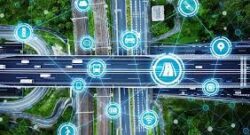
Technology is Revolutionizing Road Safety”
In today’s rapidly evolving world, the automotive industry is undergoing a transformation like never before. Technological advancements are reshaping the way vehicles are designed, operated, and maintained. One of the most significant impacts of this technological revolution is the improvement in road safety. Compared to the past, vehicles are now equipped with an array of tech-based solutions that, along with accident data analysis, are saving lives on our roads. 1. Advanced Driver Assistance Systems (ADAS) One of the most notable advancements in road safety technology is the widespread adoption of Advanced Driver Assistance Systems (ADAS). These systems use various sensors and cameras to assist drivers in making safer decisions on the road. ADAS features include adaptive cruise control, lane-keeping assist, blind-spot monitoring, and automatic emergency braking. ADAS not only helps prevent accidents but also reduces the severity of crashes when they do occur. By providing real-time feedback and assistance, these systems act as a safety net for drivers, especially in situations where human error might come into play. 2. Vehicle-to-Everything (V2X) Communication V2X communication is another groundbreaking technology that is changing the way vehicles interact with their environment. This system allows vehicles to communicate with each other and with roadside infrastructure, such as traffic lights and road signs. V2X can provide drivers with vital information about potential hazards, road conditions, and the presence of other vehicles, enhancing overall road safety. In emergency situations, V2X can automatically alert nearby vehicles to potential collisions, giving drivers more time to react and avoid accidents. This technology has the potential to greatly reduce accidents caused by human error and improve traffic flow. 3. Big Data and Accident Data Analysis The collection and analysis of accident data have become more sophisticated with the advent of big data technology. Through the use of connected vehicles and sensors, vast amounts of data can be gathered about road conditions, driver behavior, and accident patterns. This data is then analyzed to identify trends and potential areas for improvement in road safety. Accident data analysis has enabled authorities to take targeted actions, such as improving road infrastructure, implementing stricter traffic regulations, and launching public awareness campaigns to address specific safety concerns. It’s a proactive approach to reducing accidents and saving lives on the road. 4. Autonomous Vehicles The development of autonomous vehicles is perhaps the most groundbreaking advancement in road safety technology. While fully autonomous vehicles are still in the testing phase, they hold the promise of eliminating the vast majority of accidents caused by human error. These vehicles use sensors, cameras, and advanced algorithms to navigate the road safely and make split-second decisions to avoid collisions. When autonomous vehicles become more prevalent on the roads, they have the potential to revolutionize transportation safety, dramatically reducing the number of accidents and fatalities. In conclusion, the vehicles of today are significantly safer than their predecessors, thanks to the integration of tech-based solutions and the analysis of accident data. Advanced driver assistance systems, V2X communication, big data analysis, and the future potential of autonomous vehicles are all contributing to a safer road environment. As technology continues to advance, we can expect even more innovative solutions to emerge, further enhancing road safety and saving lives on our highways and streets.

Electrically Charged Nanoparticles Target and Destroy Brain Tumor Cells”
Researchers from the University of Nottingham, led by the School of Pharmacy, have made a groundbreaking discovery in the fight against hard-to-treat brain tumors, particularly Glioblastoma. They have developed a novel approach that utilizes electrically charged molecules attached to gold nanoparticles, referred to as bio-nanoantennae, to trigger programmed cell death (apoptosis) in cancer cells upon electrical stimulation. This pioneering research has the potential to revolutionize brain cancer treatment and has been published in the prestigious journal Nature Nanotechnology. Glioblastoma is a highly aggressive and challenging form of brain cancer, notorious for its resistance to current treatments. With a meager five-year survival rate of just 6.8% and an average life expectancy of only eight months from diagnosis, new therapeutic strategies are urgently needed. The key innovation in this research lies in the ability of bio-nanoantennae to specifically target Glioblastoma cells while leaving healthy brain cells unharmed. This remarkable precision opens up promising avenues for the development of treatments during surgical resection of brain tumors. In such scenarios, these bio-nanoantennae could be administered as a spray or injection. The multidisciplinary team behind this breakthrough, comprising experts from the Schools of Engineering, Physics, and Medicine, has introduced what is being hailed as the first “quantum therapeutic.” This cutting-edge approach harnesses the power of quantum signaling to combat cancer. Dr. Frankie Rawson, the lead researcher, elucidated the mechanism behind this innovation: “The team showed that cancer cells succumb to the intricate dance of electrons, orchestrated by the enchanting world of quantum biology. With the advent of bio-nanoantennae, this vision of real-world quantum therapies edges closer to reality. By precisely modulating quantum biological electron tunneling, these ingenious nanoparticles create a symphony of electrical signals that trigger the cancer cells’ natural self-destruction mechanism.” The team’s groundbreaking work has not gone unnoticed. They have secured funding from the Medical Research Council (MRC) to accelerate the development of this technology toward clinical applications. Additionally, they have filed a patent to protect their invention. While this discovery holds immense promise, further rigorous research and validation are necessary to ensure the safety and effectiveness of bio-nanoantennae for human use. Nevertheless, it represents a significant step forward in the quest to combat Glioblastoma and other challenging brain tumors.

A Sustainable Revolution in Energy-Efficient Computing”
In a groundbreaking development, researchers are exploring the potential of utilizing heat instead of traditional electricity to fuel the algorithms driving neural networks and artificial intelligence systems. This innovative approach promises to revolutionize the field of AI by significantly reducing energy consumption, a critical concern in today’s world. Nicolas Brunner, a prominent researcher at the University of Geneva in Switzerland, highlights the energy-intensive nature of advanced AI models like ChatGPT. He underscores the urgency of addressing this issue, as ChatGPT’s daily energy consumption alone is estimated to rival that of more than 30,000 households in the United States. To tackle this challenge, scientists are looking to leverage heat as an alternative power source. The majority of modern AI technology relies heavily on electricity, contributing to growing concerns about energy efficiency and environmental impact. However, the emerging concept of heat-based AI holds the potential to mitigate these issues substantially. Here’s a closer look at this promising development and its implications: The Heat-Based AI Paradigm Traditional AI hardware, such as graphics processing units (GPUs), consumes a significant amount of electricity to process complex algorithms. In contrast, heat-based AI seeks to harness the heat generated during computation to power neural networks and other AI models. This paradigm shift offers several notable advantages: 1. Energy Efficiency: By repurposing heat as a power source, AI systems can significantly reduce their energy consumption. This not only lowers operational costs but also minimizes the carbon footprint associated with AI technologies. 2. Sustainable AI: Heat-based AI aligns with global efforts to transition to more sustainable and eco-friendly technologies. It paves the way for AI systems that can operate efficiently without exacerbating energy-related environmental challenges. 3. Cost Savings: With electricity costs on the rise, businesses and data centers are eager to find cost-effective alternatives. Heat-based AI presents an opportunity to cut down on energy expenses, making AI more accessible and affordable. The Road Ahead While the concept of heat-based AI shows immense promise, there are still numerous challenges to overcome before it becomes a mainstream reality. Researchers are actively exploring novel materials and designs for AI hardware that can efficiently convert heat into usable energy. Additionally, the integration of heat-based AI into existing systems and infrastructure poses logistical hurdles. However, the potential benefits are too significant to ignore. As researchers and engineers continue to innovate in this field, we may witness a transformative shift in the way AI systems are powered. This shift has the potential to not only make AI more sustainable but also expand its applications into resource-constrained environments where traditional electricity is limited. In conclusion, the quest to harness heat as a viable energy source for AI represents a promising avenue for reducing the energy budgets of AI models like ChatGPT. This innovation aligns with the broader global imperative to develop sustainable technologies and reduce our carbon footprint. As advancements in heat-based AI continue to unfold, the future of energy-efficient and eco-friendly artificial intelligence looks brighter than ever.

“Aquaman and the Lost Kingdom: Navigating Turbulent Waters to the Silver Screen”
In the midst of a turbulent period marked by the SAG-AFTRA strike, the highly anticipated film “Aquaman and the Lost Kingdom” is set to make its debut without the usual fanfare generated by its star-studded cast. Starring Jason Momoa, Patrick Wilson, Amber Heard, and Yahya Abdul-Mateen II, the film faces an uncertain promotional future should the strike persist beyond December. “The Lost Kingdom” has endured a lengthy and arduous journey to the silver screen, much like many other films produced during the COVID-19 era. Initially slated for a December 2022 release, the film’s premiere date was subsequently pushed to March 2023, only to be rescheduled once more to Christmas 2023. Along the way, it navigated through multiple shifts in leadership at Warner Bros. and underwent a series of reshoots, indicative of the challenges faced by many productions during the pandemic. This cinematic installment serves as the culmination of a decade-long universe that began with Zack Snyder’s “Man of Steel” in 2013. As “Aquaman and the Lost Kingdom” concludes this era, executives James Gunn and Peter Safran are poised to usher in a new universe, with “Superman: Legacy” slated for a July 2025 release. Director James Wan, in an interview with THR in April, hinted at the film’s thematic depth, stating, “This movie has something to talk about [climate change], but it’s still a fun action-fantasy movie.” Despite the challenges and delays, “Aquaman and the Lost Kingdom” promises to deliver an entertaining blend of action and fantasy while addressing pertinent global issues. As the SAG-AFTRA strike looms, the fate of this cinematic venture remains uncertain. Nevertheless, fans of the Aquaman franchise eagerly await its release, ready to dive into a world filled with adventure, spectacle, and, perhaps, a meaningful message about climate change.


Night Owls Beware: Evening Chronotype Tied to Higher Diabetes Risk and Unhealthy Lifestyles”
A recent study conducted by investigators at Brigham and Women’s Hospital has delivered a significant message to night owls. The research suggests that individuals with a propensity for later sleep and wake times not only lead less healthy lifestyles but also face a higher risk of developing diabetes compared to their early-riser counterparts. The study’s findings have been published in the Annals of Internal Medicine. The term “chronotype,” often associated with circadian preference, pertains to an individual’s preferred sleep and wake timing, which can be partly influenced by genetics and might be challenging to alter. Dr. Tianyi Huang, the corresponding author of the study and an associate epidemiologist in Brigham’s Channing Division of Network Medicine, stressed that those who identify as “night owls” should be more vigilant about their lifestyle choices, as their evening chronotype could elevate their risk of type 2 diabetes. Previous research by these investigators had already identified a connection between irregular sleep patterns and an increased risk of diabetes and cardiovascular diseases. Furthermore, they had observed that individuals with evening chronotypes were more likely to exhibit erratic sleep schedules. The current study aimed to explore the relationship between chronotype and diabetes risk while taking lifestyle factors into account. The research team analyzed data from 63,676 female nurses participating in the Nurses’ Health Study II, collected from 2009 to 2017. The study included assessments of self-reported chronotype (whether participants considered themselves evening or morning people), diet quality, weight, body mass index (BMI), sleep timing, smoking habits, alcohol consumption, physical activity, and family history of diabetes. Diabetes status was determined through participants’ self-reports and medical records. The Nurses’ Health Study II, conducted jointly by Brigham’s Channing Division of Network Medicine and Harvard T.H. Chan School of Public Health, stands as one of the most comprehensive investigations into risk factors for major chronic diseases in women. Its strength lies in regular follow-ups with participants and repeated assessments of health and lifestyle factors. Approximately 11 percent of the participants identified as having a definite evening chronotype, while around 35 percent considered themselves definite morning chronotypes. The remaining participants, roughly half, fell into the “intermediate” category, signifying that they leaned neither significantly towards being morning nor evening types or only slightly favored one over the other. The study revealed that having an evening chronotype was associated with a 72 percent increased risk of diabetes before accounting for lifestyle factors. Even after adjusting for these factors, an evening chronotype was still linked to a 19 percent increased risk of diabetes. Notably, among individuals with the healthiest lifestyles, only 6 percent were evening chronotypes, while among those with the unhealthiest lifestyles, 25 percent identified as evening chronotypes. Individuals with evening chronotypes were found to be more likely to consume higher quantities of alcohol, maintain a low-quality diet, sleep fewer hours per night, currently smoke, and exhibit unhealthy weight, BMI, and physical activity levels. In conclusion, this study underscores the importance of chronotype in assessing diabetes risk and highlights the role of lifestyle choices in mitigating this risk. Night owls may benefit from adopting healthier habits to reduce their chances of developing type 2 diabetes.

Navigating Data Privacy Concerns: A Closer Look at Period Tracker Apps”
Period tracker apps have become increasingly popular among individuals who want to monitor their menstrual cycles, predict their periods, and track associated symptoms. These apps offer convenience and useful features, but recent data privacy concerns have prompted a closer examination of how these apps handle user data. In this article, we will review several period tracker apps, highlighting data privacy issues and suggesting alternatives that prioritize user privacy. Data Privacy Concerns Alternatives for Privacy-Conscious Users If data privacy is a top priority for you, consider these alternatives to period tracker apps: Conclusion Period tracker apps offer valuable insights into women’s health and reproductive cycles, but they vary in their data collection and sharing practices. Privacy-conscious users should carefully review privacy policies and consider alternatives that align with their data protection preferences. While some apps are more responsible with user data, others may raise red flags, making it crucial for users to make informed choices about their digital health tracking.