
1. Game Overview
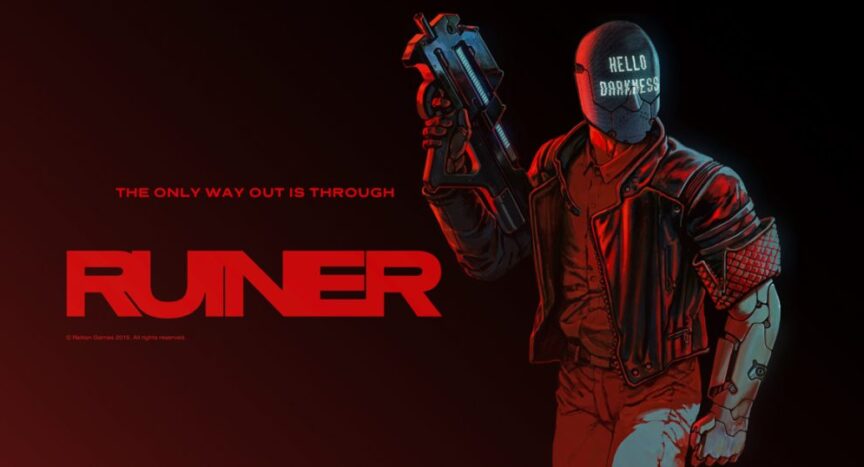
RUINER is a fast-paced twin-stick shooter set in a bleak cyberpunk metropolis in the year 2091 called Rengkok. You play as a masked, silent protagonist working with mysterious hackers to rescue a kidnapped brother and take down the corrupt megacorporation called Heaven. The gameplay emphasizes agility, using both gunplay and melee, with dashes, shields and upgrades playing a key role in survival. Its aesthetic is dark and intense, with neon-soaked visuals and a soundtrack that amplifies its mood

- Developer: Reikon Games
- Publisher: Devolver Digital
- Release Date: September 26, 2017
- Platforms: Windows, Linux, PlayStation 4, Xbox One, Nintendo Switch
- Genre: Twin-stick shooter
- Core Loop: Spot enemies → Dash / move into attacking range → Shoot or melee attack → Evade / dash away to avoid damage → Collect loot/experience/skill points → Upgrade weapons/skills → Repeat

Heads-Up: The game is very unforgiving, even normal difficulty demands precise dash timing and positioning. One bad mistake in a dense room often means death.
2. Core Facts Table (Quick Reference)
The following table summarizes how key systems in RUINER evolve from early game to late game. The goal is to show how your decisions, from weapon choices and augmentations to upgrades and dash mechanics, shift in importance over time, and how mastering the systems lets you survive tougher encounters.

| System | What It Does (Early Game) | What It Does (Late Game) | Player Impact (Early vs Late) |
|---|---|---|---|
| Combat | Basic twin-stick shooting, picking up first melee and ranged weapons, learning dash/dodge and slowdown mechanics. | Complex enemy patterns and boss mechanics require tight dash timing, dash chains, combined melee/ranged tactics, and smart use of slowdown. | Early: survival depends on mastering movement and dodging.Late: precision, mobility and ability-combos determine efficiency and success. |
| Weapons | Use whatever ranged and melee drops you find; ammo and melee durability are obvious constraints. | Greater weapon variety and upgraded base weapon options, plus upgrades that improve ammo, durability and firing characteristics. | Early: experiment and adapt to limited options.Late: choose and upgrade loadouts to suit encounter types and boss fights. |
| Augmentations/Abilities | Unlock a few core abilities like shield or basic active skills and a small number of augment slots. | Many more active and passive augments become available, with more slots and opportunity to respec for different builds. | Early: a single augment choice can swing a fight.Late: synergistic augment combos offer tactical advantage and build diversity. |
| Upgrades/Progression | Earn initial skill points and small upgrades that boost survivability, weapon durability or dash energy. | Larger upgrades, more augment slots, improved weapon stats and durability, and vendor options for specialized improvements. | Early: prioritize general survivability and core tools.Late: specialize upgrades to optimize speed, damage or boss strategies. |

Resource Note: Don’t waste ammo on weaker enemies. Melee kill chains can help conserve your ranged ammo and durability.
3. Combat Fundamentals and Weapons
RUINER’s combat blends fast-paced gunplay with melee finishers and tactical dashes. Players toggle between shooting and close-quarters melee kills, using dash to dodge enemy fire or close gaps. Crate drops throughout levels contain new weapons. The RUINER pistol has infinite ammo but other weapons have limited ammo or durability, so resource management matters.

- Dash/Dodge: Press dash to quickly evade attacks because a well-timed dash reduces damage taken.
- Melee Takedowns: Stun enemies, then perform melee finishers to deal extra damage or kill; melee weapons have durability. (They do not always refill dash energy or always trigger slow motion by default.)
- Weapon Variety: Weapons like pistols, SMGs, shotguns etc., each have unique recoil, spread, and damage, so switch according to range or crowd situations.
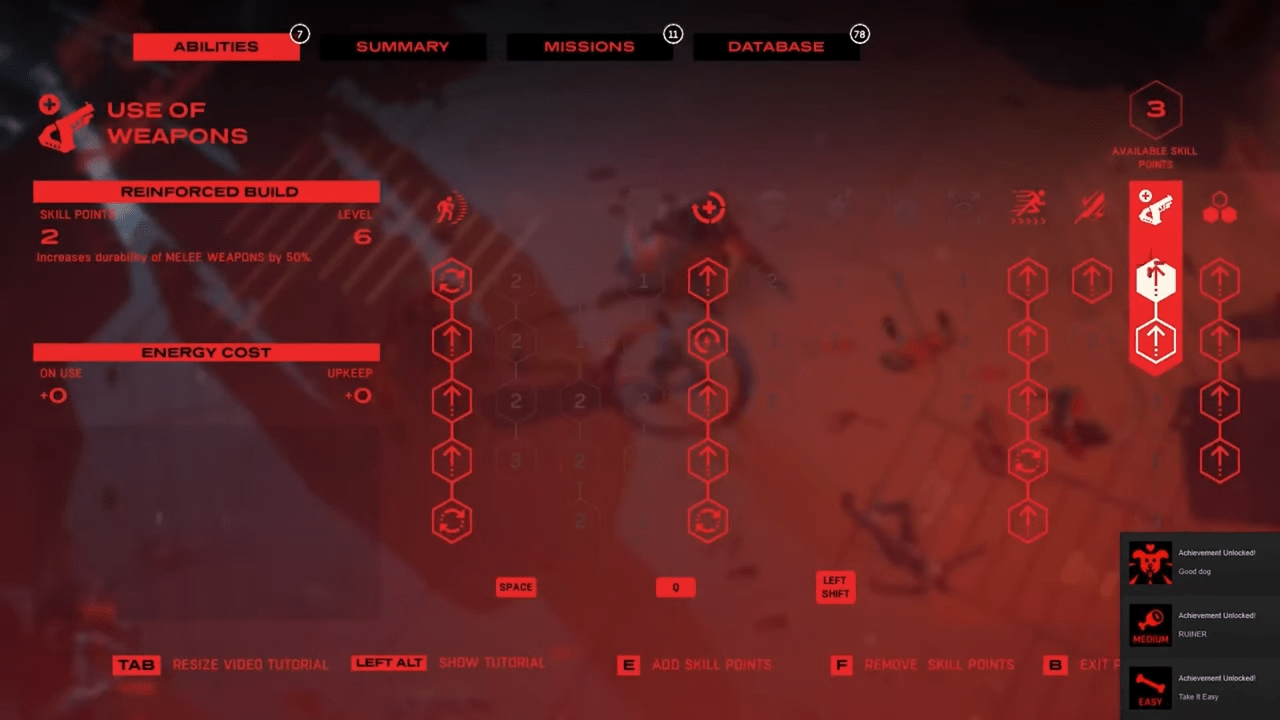
- Ammo/Durability Management: Non-RUINER weapons often have limited ammo or degrade; “Use of Weapons” passive ability increases ammo availability and weapon durability
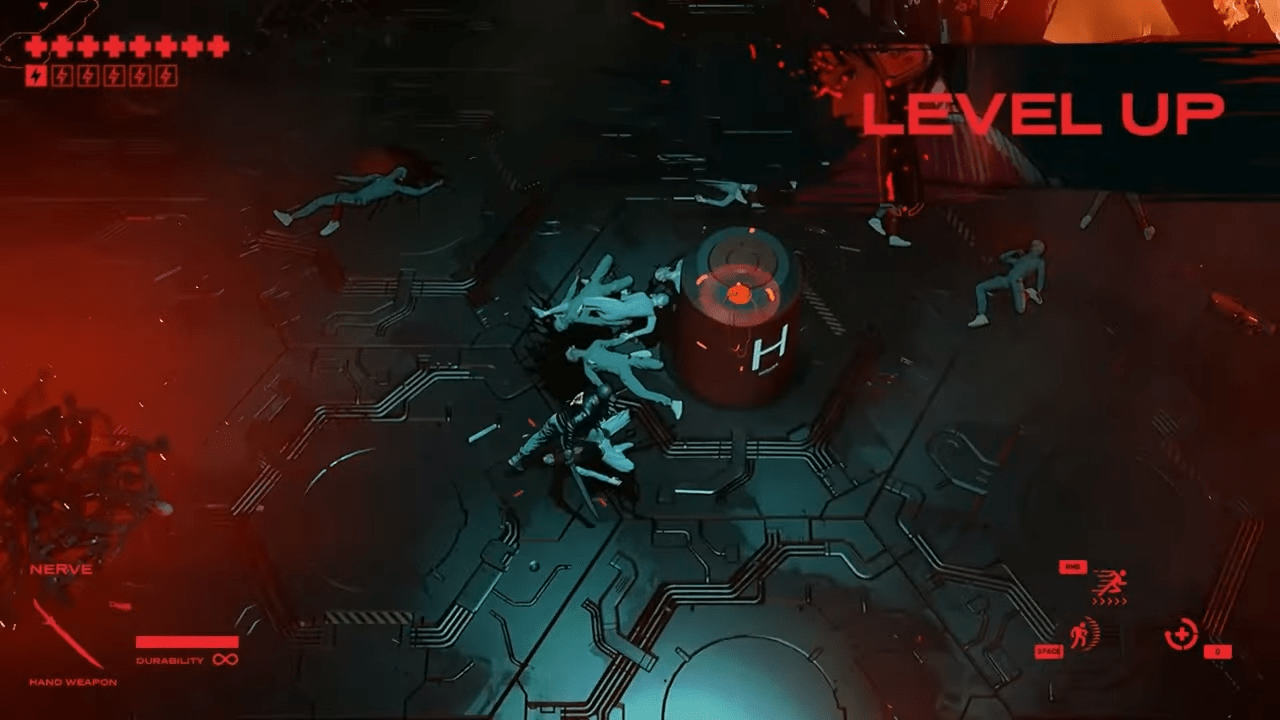
Pro Tip: During New Game+ and later sectors, put points into “Resource Optimizer” to boost max health/energy and get a safety margin for mistakes.
4. Augmentations and Upgrade Path
Augmentations expand your abilities through mods you unlock using memory chips, which serve as the game’s upgrade currency. Safe-zone vendors grant access to new mods and skill upgrades (e.g. shield, Overload, Supply Drop, stun launcher), with some mods having stat or “Core Power” requirements before you can equip them.
- Memory Chips: These are the primary resource used to purchase and unlock augmentations and skills. They are acquired by completing missions, exploring hidden areas, defeating minibosses, and normal enemies in levels.
- Mods, Skill Slots & Core Power: Early on, you have limited capacity to equip active mods. As you advance, you unlock more augment/skill slots and increase “Core Power,” which allows use of more powerful mods or combinations.
- Vendors, Upgrade Menus: Vendors in safe zones or upgrade menus allow you to buy mods and upgrade augment tiers. Some upgrades (in the skill tree) grant better weapon stats, increased durability, ammo, or access to higher tier mod slots.
- Mod Synergies: Pair offensive mods with defensive or utility mods to balance survivability and damage output. The right combination can help against both large groups of enemies and boss fights.

Quest Tip: Be careful. Some players report quest reward display issues, so keep track of “quest turned-in” stats to confirm you actually received rewards
5. Missions and Boss Structure
The campaign moves through multiple sectors of Rengkok, each comprising sequences of combat arenas and culminating in a major boss battle. While some missions feature hacking terminals or puzzles, these are not present in every sector.

- Sector Flow: Each sector includes combat encounters, narrative progression, optional side content (such as the C.A.T.S. mission) and ends in a boss fight. Optional missions such as C.A.T.S. require you to hack surveillance devices spread across levels to unlock hidden weapon stashes.
- Boss Patterns: Bosses use telegraphed attacks and weak or stun phases, so mastering dash timing, positioning, and knowing when to use melee or ranged weapons is crucial.
- Loadout Preparation: Safe zones allow players to swap weapons and adjust mods and augmentations before boss fights.
- Optional Side Content: The game contains optional side missions and hidden rooms that reward extra loot and weapon stashes (the C.A.T.S. missions specifically reward access to hidden weapon stashes).

Boss Insight: Before bosses, adjust mods/augments in safe zones to match their known weaknesses (crowd control, explosive, shield burst).
6. Difficulty, Platform Notes and Quality-Of-Life
Difficulty
RUINER is designed around tight, high-intensity combat, so its baseline challenge is deliberate and often punishing. The studio released a post-launch balance patch that smoothed some of the harsher spikes, but even on Normal the game rewards learning and precision rather than brute force. New Game Plus exists and raises enemy toughness, but veteran players often find its increased challenge mitigated by having full skill unlocks from the first run.

- Three standard difficulties: Easy, Normal, Hard. Easy is friendlier for exploration while Normal and Hard require better dash timing and resource management.
- A patch after launch reduced some enemy health and improved weapon behavior to make hits feel fairer. This helped with “bullet sponge” complaints on Normal and Hard.
- NG+ is available and nominally harder than Hard, but you start with previously unlocked skills which changes how difficult it feels in practice.
- Expect boss fights and dense arenas to be the steepest difficulty walls; mastery of movement, melee windows, and aug combos is the biggest effective shortcut to success.
Platform Notes
Performance and input feel matter a lot for a game built on split-second movement and aiming, so platform differences influence the experience more than they would for a slower game. Reviews and player reports show the Switch port is serviceable, while PC and modern consoles typically offer the most consistent responsiveness.

- Nintendo Switch: generally holds a 30 fps target in handheld while docked mode can stutter during very intense scenes. Joy-Con aiming is serviceable, but some players find twin-stick aiming less crisp than on a control pad or mouse. Adjust expectations for visual fidelity and input feel on Switch.
- Controls: mouse and keyboard or a gamepad both work, but tight dash and aim windows reward the control method you are most comfortable with. If you feel input lag on any platform, lower settings or a wired controller often improves responsiveness.
Quality-Of-Life
RUINER packs several player-friendly systems that limit frustration and encourage experimentation, though some rough edges remain in how checkpoints and saves are handled. Respeccing is flexible and replay options are present, but the community has flagged checkpoint placement as an area that can catch players off guard.

- Respecing: You can reassign skill points, allowing you to experiment with aug and weapon synergies without permanent penalty. This is a major QoL win for build experimentation and for adapting to boss fights.
- Replayability features: Level select, Speedrun mode and Arena/score challenges let you replay favorite sections for practice, ranks, or achievements. These modes add longevity beyond the main campaign.
- Checkpoints and saves: Saves and checkpoint placement can feel uneven to some players, and several community threads request clearer or more generous checkpointing. Expect to rely on the game’s existing save behavior and plan risky runs accordingly.
- Minor conveniences: The game lets you change loadouts in safe zones, and the upgrade UI shows clear skill descriptions, so you can make informed respec choices.

Accessibility Tip: There is no color-blind mode, and controls are not remappable as of last major patch, which some players report as a barrier.
7. Practical Strategies & Advanced Tips
Below are six advanced, practice-proven strategies. These are meant to help you optimize builds, survive harder fights, and shave time off your runs by making smarter decisions with skills, loadouts, and combat technique:

- Unlock and invest in the Energy Shield skill early to survive boss burst phases and sustain damage during prolonged fights.
- Upgrade your dash ability (at least one tier) so you take less damage when evading and can use dash+melee combos more safely.
- Prioritize the “Resource Optimizer” skill early to boost max health and energy for margin of error in tougher sectors.
- Explore thoroughly for hidden Karma boxes and weapon pickups—corner rooms often hide resources that accelerate skill growth.
- Use the Weapons Grinder after battles to recycle unwanted weapons, gaining karma and sometimes rare weapons that trickle out of the recycling process.
- In hard or timed engagements, combine dash + melee attacks to kill weaker enemies fast, then focus ranged fire on tougher foes while maintaining mobility

8. Conclusion
RUINER is about surviving by staying sharp, knowing when to dodge and strike, and customizing your build for each encounter. The world it builds is harsh and the challenge is real, but with the right mix of strategy, timing, and build adaptability, you’ll find yourself overcoming even the most punishing rooms and bosses. So, use our tips and strategies to unlock smoother runs, tighter combos, and more satisfying victories across Rengkok!


Customer Reviews
Thanks for submitting your comment!