
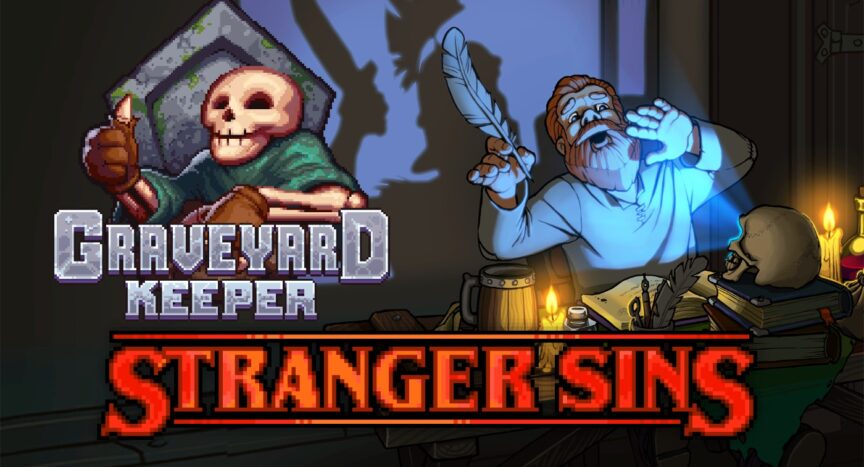
1. Game Overview
Graveyard Keeper is a darkly humorous simulation game in which you take on the role of a cemetery keeper after waking up in a strange medieval world. You manage and expand a run-down graveyard, perform funerary tasks, craft items, farm, explore dungeons and interact with villagers while juggling energy, morality, and resources. Your ultimate goal is to unlock a portal back to your own world, though to do so you must complete quests and gain the trust of key characters.

- Developer: Lazy Bear Games
- Publisher: tinyBuild
- Release Dates: August 15, 2018
- Platforms: Windows, macOS, Linux, Xbox One, PlayStation 4, Nintendo Switch, iOS, Android
- Genre: Management Simulation, Indie Simulation with RPG & crafting elements
- Core Loop: Gather resources → Craft items/infrastructure → Complete NPC quests or tasks → Improve graveyard & church quality → Unlock new tech/tools/areas → repeat

Heads‑Up: The donkey delivers new corpses immediately after sundial crosses noon, so delay corpse preparation and quality degrades fast
2. Core Facts Table (Quick Reference)
Below is a quick reference table that condenses Graveyard Keeper’s core systems and their gameplay effects for easy scanning and planning
| System | What It Does | Player Impact |
|---|---|---|
| Burial / Autopsy Workflow | Prepare corpses (autopsy / embalm), dig graves, perform sermons | Higher grave rating = more income & better NPC reactions; slow handling stalls progress |
| Crafting & Production | Convert raw materials into tools, coffins, decorations via benches | Better production speeds tasks and unlocks content |
| Alchemy & Research / Tech Tree | Research recipes; make potions, extracts, embalming items | Enables advanced mechanics and late-game options |
| NPC Questlines | NPCs give tasks that unlock blueprints and areas | Key to progression; missing quests can block content |
| Farming & Cooking | Grow crops and cook meals to restore energy | Sustains workdays; good food improves efficiency; some quests need dishes |
| Resource / Time & Energy Management | Gather/manage resources; limited daily energy/time; tool decay | Poor planning wastes time; balancing avoids bottlenecks |
| Faith / Moral & Church System | Earn Faith via sermons/confession; manage corpse morality | Affects research/NPC access and sermon benefits |
| Graveyard / Church Rating & Skull System | Corpse skull stats + decor determine grave rating | Directly determines sermon income and rewards |
| DLC / Additional Systems | Extra mechanics, events and recipes from DLCs | Adds content depth and shifts player priorities |

Quick Reminder: Extract blood every time you need it for Snake’s quests and many alchemy recipes and store extras.
3. Burial Workflow, Grave Rating, and Cemetery Management
The core loop revolves around receiving bodies, preparing them for burial, building graves and coffins, and improving graveyard rating. Grave rating is influenced by grave type, coffin, grave decorations, corpse treatment (e.g. removal of organs, injections, embalming), and church & service activities like sermons.

- Body handling steps: Includes moving the body to a preparation place or within the morgue (to slow decay), using the autopsy table or preparation workstations; removing organs, fat, blood; applying injections / embalming fluids; choosing which organs to keep or replace; finally placing in a coffin and burying.
- Grave types and rating: Graves with higher-quality tombstones, fences, decorations, and upgraded grave types do increase the graveyard rating. However, the maximum benefit from a grave is limited by the number of white skulls a corpse has (the corpse rating). Decorative items and maintenance also contribute.
- Church and NPC interactions: Performing church tasks (sermons, upgrading church, completing related quests) affects church rating, which influences how many pilgrims attend and which sermons you can perform. NPC questlines unlock mechanics needed for things like better corpses or better grave decorations. Graveyard rating influences donation amounts from sermons; church rating contributes to sermon quality and faith gained

Practical Tip: Focus on unlocking the Teleportstone early because it reduces travel time massively between graveyard, house, and vendors.
4. Crafting, Production Chains, and Alchemy
Raw resources like wood, stone, animal parts, plants, ores etc. are used at various workstations (e.g. Carpenter’s Workbench, Forge, Metalwork, Tailoring benches) to make essentials: tools, coffins, decorative grave items, furniture, etc. Many bench unlocks and blueprints are gated by NPC questlines or technology and study desk progress.

- Alchemy and recipe unlocking: Alchemy requires the Tier I Alchemy Workbench (which uses combinations of powders and solutions) and Tier II (combining three ingredients: powder, solution, extract) for more advanced recipes. Ingredients are gathered or processed via mills, preparation workstations, etc. Ash (from cremating corpses), reagents, etc., are core materials.
- Automation, economy and intermediate processing: There are intermediate steps and production loops (e.g. converting raw stone into refined parts, processing corpses into reagents, making charcoal or peat, composting, mills etc.) that increase efficiency. Bench upgrades, unlocking better workstations, and using higher-tier alchemy workbenches reduce manual micromanagement.

Resource Note: Resources like iron and stone nodes are limited, so harvest early, store up, and use alternate sources (trading, swamp deposits) when map nodes run out.
5. NPCs, Questlines, and DLC Content
NPCs provide structured questlines that unlock mechanics, blueprints, shops and story progression. The fandom wiki catalogue quest chains and note missable steps; following a checklist early prevents accidental lockouts.

- Key NPCs: Important NPCs include the Bishop (faith mechanics), the Merchant (shop access), and Tress (wood goods), among many others such as Clotho, Gerry and the Astrologer. Completing their questlines opens workshops, recipes and locations.
- Missables: Several quests, choices and achievements are time or choice-gated and can be missed if ignored (e.g. certain late quest decisions in the Inquisitor chain). So, use a checklist or saves to avoid lockouts.
- DLCs: Multiple DLCs expand quests and mechanics. Major packs are Breaking Dead (zombie/automation content; free on PC at launch but paid on some console/mobile platforms), Stranger Sins (tavern + extended story and villager personalities), Game of Crone (refugee camp, new story content), and Better Save Soul (soul-cleansing mechanics and remote craft control). DLC availability and pricing vary by platform; check platform stores for details.

Quest Tip: NPCs appear only on certain days (e.g. Bishop on “Pride Day,” Astrologer on “Sloth” day). Mmissing their presence delays questlines, so always check NPC day schedule.
6. Economy, Resources, and Long‑Term Planning
Income streams include church donations (sermon donations scale with graveyard and church ratings), selling burial certificates and crafted goods to merchants, and DLC/event sources such as tavern sales and festival rewards. Church/sermon mechanics are a steady money/faith source and burial certificates (and some crafted/alchemical goods) are reliable cash income
- Finite nodes: Some resource nodes are finite (i.e. stone & iron outcroppings, marble blocks, bog iron deposits) though others, like quarry deposits, can be infinite. Early stockpiling is recommended, and later alternate sources (zombie-mined ore, trader purchases) are important for continued progression
- Profitable goods: Higher tier items (silver/gold quality food, decorative items, crafted luxuries, burial certificates) tend to give higher return per resource invested. Crafting and selling crates of goods via the merchant often outpaces simpler crop or raw material sales.
- Festival and side income: Tavern events, NPC requests and timed events open temporary income windows and unique rewards (e.g., event sales of quality drinks or special quest payouts). Scheduling production around events (for example producing gold-quality wine or event food) improves returns.

7. Practical Early‑Game Route and Priorities
Community starter guides and the fandom wiki agree on a practical early route: secure a steady corpse-processing loop, unlock essential workstations, buy a Teleport Stone to cut travel time when available, and prioritize NPC questlines that open workshops and trading.

- Set up a corpse flow: Route corpses from the road/dungeon → preparation/autopsy table → coffin/embalming bench → graveyard plot. This layout minimizes hauling and decay and lets you focus on producing higher-rating corpses.
- Unlock key benches early: Research and build basic benches (Carpenter’s workbench, Furnace/Forge, Sawmill) so you can craft coffins, parts and basic tools quickly; these techs are commonly gated behind early quests or tech nodes.
- Acquire fast travel: Get or buy the Teleport Stone (available from Horadric or via quests depending on version) as soon as practical to save hours of walking and to pull items with you while teleporting. Use teleport scrolls only if you need one-time teleports.
- Stockpile finite resources & start basic research: Build early reserves of stone, iron, wood and begin low-tier alchemy tech research, so you can produce higher-value goods later without running dry. Community guides recommend grabbing deposits and converting excess into storable intermediate goods.
- Follow an NPC quest checklist: Prioritize NPCs who unlock workstations, blueprints, or map access and follow a checklist to avoid missable quest triggers and time-gated choices. Save before major decisions to prevent accidental lockouts.

Survival Tip: Don’t skip sleep or meals. If you let energy or health drop too low, actions cost much more or become impossible, thus pacing matters
8. Advanced Tips and Quality‑of‑Life Strategies
Advanced players use production automation, optimized layouts, and careful resource swaps to speed completion. This should also include optimized cemetery layouts, production throughput diagrams, and DLC‑aware routing for achievements and 100% completion runs.

- Use the Teleportstone smartly: Buy from Horadric early. Right-click in inventory → “use” to teleport. Cooldown ~30 seconds. Carries one object or zombie with you.
- Don’t let corpses decay: Bodies lose quality below 90% → green skulls. Use morgue, pallets, or autopsy table to slow decay. Cremate or toss badly-rotted corpses.
- Maximise corpse quality for grave rating: Remove fat, blood, organs; use embalming. Use grave dressings (fences, gravestones) but grave rating can’t exceed number of white skulls.
- Recycle & use parts efficiently: Even “bad” corpses provide usable materials (meat, skin, bones, organs) for crafting, alchemy or zombie upgrades. Use compost from plant waste.
- Upgrade tools & workstations early: Better benches and tools speed up corpse processing, crafting, and altar/workshop tasks. Focus on unlocking essential stations via NPC & tech quests.

9. Conclusion
With the right early focus on corpse handling, workstation unlocking, and resource management, you’ll unlock the mechanics that turn Graveyard Keeper from a grind into a satisfying, strategic experience. Use this guide to streamline your production chains, and take full advantage of quests and DLC content. As you grow your graveyard’s rating, improve your tools and alchemy, and manage your faith and time well, you’ll turn every burial into both art and income. Follow the steps here, adapt as needed, and watch your cemetery thrive!



Customer Reviews
Thanks for submitting your comment!