
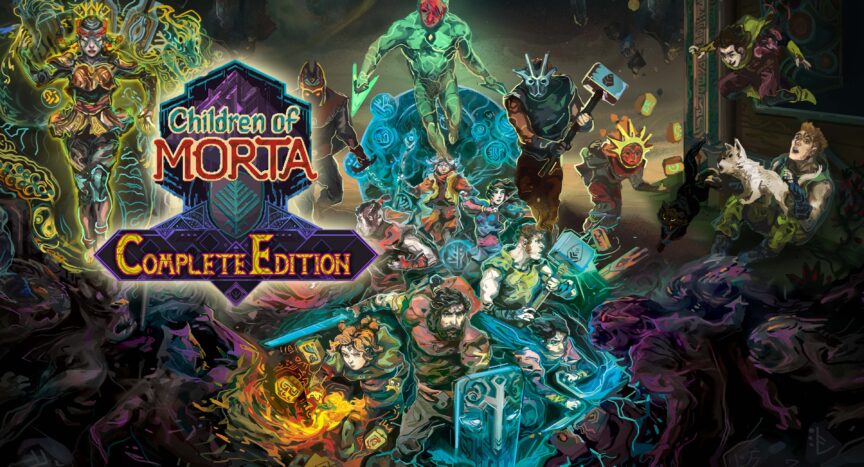
1. Game Overview
Children of Morta is an action-RPG with roguelite elements where you control the Bergson family, guardians of Mount Morta, against a spreading evil known as the Corruption. You unlock and play as multiple family members, each with distinct styles and skillsets, while exploring dungeons that are procedurally generated. Between runs, you return home, level up family members, unlock shared upgrades, and deepen characters’ stories. The game blends emotional storytelling about loss, hope, and sacrifice with tense combat, varied abilities, and artistic pixel art visuals.

- Developer: Dead Mage
- Publisher: 11 bit studios
- Release Date: September 3, 2019
- Platforms: Windows, macOS, Linux, PlayStation 4, Xbox One, Nintendo Switch, Android, iOS
- Genre: Action role-playing, roguelike
- Core Loop: Choose a Bergson family member → explore a procedurally generated dungeon → battle enemies and bosses → return to family home, spend earned gold and unlock upgrades (story progression) → repeat with improved character stats and new unlocks

Quick Reminder: Don’t forget gems because they’re needed not only to open chests, but also to buy relics and Divine Graces from the in-dungeon merchant.
2. Core Systems Cheat Sheet
Below is a streamlined reference table summarizing Children of Morta’s core systems. It outlines how your family’s growth, dungeon runs, upgrades, and narrative elements interlock, and how each system shapes what you do during and between runs. Use this snapshot to understand the mechanics at a glance before diving into detailed strategy.

| System | What It Does | Player Impact |
|---|---|---|
| Family Progression and Homestead | Spend gold and resources to unlock permanent upgrades, traits, and boosts | Power buildup carries between runs, easing future runs |
| Run Structure (Vaults and Dungeons) | Procedurally generated rooms, events, mobs, and bosses | Rewards (XP, relics, runes) fuel your progression loop |
| Runes, Relics and Divine Items | Runes add temporary effects per run; relics and divine items offer long-term gear | Allows both experimentation and custom build scaling |
| Co-Op (Local and Online) | Two-player mode, where host upgrades benefit both; guests can copy host’s save | Enables shared runs, though guest save progress has limits |
| Narrative and Home Sequences | Story bits, memories, and character interactions evolve at the family home between runs | Adds emotional weight and unlocks new content |
| Difficulty Scaling | Enemy strength rises and optional harder modes (Trials) provide challenges | Keeps late gameplay engaging and offers special goals |
| Achievements, Completion and Missables | Achievements tied to relics, traits, and events; some content can be skipped | Completion requires systematic runs and exploration |

Resource Note: Save gemstones rather than hoard chests early. The merchant often offers relics, Graces, or useful upgrades you’ll regret missing.
3. Family Progression, Runes, and Relics
Family progression

Between runs you spend gold and Morv at Uncle Ben’s Workshop and in the Book of Rea to unlock permanent upgrades and Family Traits. These upgrades raise base health, damage, resource drops, rune durability, and other global bonuses that persist across runs and change how each hero scales. Invest early in economy and rune/Divine Relic slots to widen your options later.
Runes

Runes are temporary, ability-specific modifiers you find during dungeon runs. You can socket one rune per attack or skill, the rune loses durability as you use that skill, and runes disappear on death. The Book of Rea contains upgrades that unlock rune access and increase rune durability, so homestead investment directly improves how reliably you can use runes.
Relics and Divine Relics

Relics and charms are persistent equipables you obtain from chests, shops, or elite encounters and carry between runs to shape long-term builds. Divine Relics are a separate class of active, run-bound items that grant strong, usable abilities during a run. You can hold and use Divine Relics with cooldowns, but you lose them on death. The Book of Rea can also unlock upgrades that add a second Divine Relic slot and reduce cooldowns.
How they work together
Use Family upgrades to shore up weaknesses so your chosen hero survives longer and can safely test runes. Treat relics as your steady, long-term toolkit, and treat runes and Divine Relics as short-term modifiers that let you adapt to a single run. Prioritize Book of Rea upgrades like Runic Knowledge and Divine Relic Mastery, and prioritize Ben’s Workshop upgrades that boost survivability and resource gain for consistent progression.

Practical Tip: Kite dangerous monsters to the safety of glowing gates, hit them with AoE, and dash inside while your skills cool down.
4. Characters, Roles, and Playstyles
The Bergson family includes multiple playable members, each with unique weapons, skills, and progression trees. Roles include shield-tank, ranged kiting, high-speed melee, and magic hybrids. Switching between characters helps mitigate corruption fatigue (a health penalty for overuse) and distributes Family XP across multiple members, promoting more balanced growth.

- John Bergson (Father): Shield and melee tank which excels at absorbing damage, controlling space, using shield blocks, and drawing aggro.
- Linda/Lucy (Ranged): Bow or magic users optimized for kiting, sustained ranged DPS, and safe positioning in boss fights.
- Younger Family Members (Kevin, Mark, Joey, etc.): Fast melee or magic hybrids built for clearing mobs quickly, avoiding damage, and dealing burst damage.
- Rotation Strategy: Rotate characters regularly to keep corruption fatigue minimal and to unlock Family Traits more evenly. (rotating every 2–3 runs keeps corruption near zero)

Quest Tip: To collect all hidden side quests (like the wolf pup, wine machine, automata, stargazer), revisit zones several times. The triggers are often RNG and not guaranteed in one run
5. Vaults, Biomes, and Boss Structure
Vaults are procedurally generated dungeons divided into biomes (e.g. Postigala Forest, Caeldippo Caves, Masks Temple) with distinct enemies, environmental hazards, and layout themes. Runs include minibosses, side rooms, resource nodes, and culminate in a biome boss whose defeat advances story beats and unlocks new upgrades or access to new biomes.

- Biome Traits: Each biome shifts the enemy pool and hazards (for example, caves favor goblins, forest has more nature enemies) so picking runes and relics suited to that biome helps counter their strengths.
- Minibosses and Events: Side rooms and event nodes yield runes, relics, crafting materials, and sometimes narrative content. Clearing these before reaching the boss increases loot and gives you better preparation.
- Boss Phases: Boss fights often have multiple phases or patterns. Success typically depends on observing attack tells, conserving stamina and dodge, and taking advantage of stun or crowd-control windows to deal damage safely

Pro Tip: Play each character enough to rank them and unlock family buffs. Resist sticking to a favorite all the time to reduce corruption penalties.
6. Co‑Op, Modes, and Save Notes
Children of Morta supports both local and online co-op in Story mode and (to an extent) Trials / Family Trials. Online co-op was added post-launch, and permanent progression, i.e. Family XP, relic unlocks, and homestead upgrades is recorded to the host’s save during shared sessions.

- Local Co-Op: Two players on one machine can run Vaults together once the prologue is complete. At the character selection screen, the second player can press “Start” on their controller to drop in.
- Online Co-Op: Remote players may join Vault runs via friend invite. The host’s save is the authoritative record for all gains. Upgrades made by the host during co-op are applied to that session for both, but will only persist to the host’s profile. Guests may copy the host’s save after the session via the slot menu’s “Copy online save” option.
- Save Advice: Host sessions when you want to ensure Family XP, relics, or homestead upgrades are comfortably recorded to your save. Guests who want those gains in their own profile should afterward copy the host’s online save or run solo for the same progression.
Additional Considerations:
- In co-op, all players use the host’s family progression and character pool. Guests do not maintain independent progression when joining another’s session.
- Upgrades purchased in the House by the host apply to both players during the session.
- In Trials and Family Trials mode, many permanent campaign upgrades do not carry over, so co-op gains there are more limited.
- If the host has DLC (e.g. Paws & Claws), certain unlocks or items (treats) might only be visible or usable by the host; guests without the DLC may not see or access them.
Survival Tip: Don’t rush. Clearing full maps and side events often yields health potions, relics, and upgrades that make later floors safer.
7. Practical Strategies and Advanced Tips
These tips focus on maximizing progression, making each run count, and adapting to Biome challenges. They cover use of relics, character rotation, run rewards, and strategy combos. Use them to smooth out difficulty spikes, boost your loot, and expand your mastery across Vaults.

- Rotate Characters Regularly
Don’t stick with just your favorite. Using different Bergson family members unlocks passive Family Traits (boosts to all characters) and reduces corruption fatigue - Prioritize Health and Power Early
Early in the game, focus upgrades in Uncle Ben’s Workshop and Book of Rea that increase your maximum health and general damage outputs. These make progression in tougher biomes much more manageable. - Master Dodge, Block, and Parry Timing
Learning enemy tells and timing your dodge or block (especially parry) can avoid huge incoming damage. Over-blocking depletes stamina, so mix defense with mobility. - Use Divine Relics Strategically
Divine Relics are powerful, but many have cooldowns and are lost on death. Pick ones that suit your current character and biome (e.g. area-effects for melee, or crowd control for ranged). Save potent relics for tougher fights or boss rooms. - Explore and Use Glowing Gates or Secret Rooms
Glowing Gates lead to side or secret areas that often contain loot, Divine Relics, or Relics/Graces. Thorough exploration earns more resources and rewards than rushing ahead. - Balance Immediate Gains with Long-Term Investments
Spend gold wisely because upgrading family traits and health early helps more than cosmetic or minor bonuses. Save for shops or upgrades that unlock new family-wide benefits. Divine Shards are especially valuable for unlocking new characters or resetting skill points. - Prepare for Boss Fights by Adapting to Biome Traits
Each biome has its own hazard types, enemy behaviors, and dominant threats. Pick runes, Divine Relics, and relics that counter those (e.g. damage over time for swarms, defensive buffs for elites, crowd control for spread-out enemies). Recognize fight phases, preserve stamina and dodge resources

Combat Tip: Pay close attention to cooldown meters. Combine dodges, AoE abilities, and retreats . Sometimes, retreating and resetting is safer than overcommitting.
8. Conclusion
Children of Morta offers more than just dungeon crawling, it invites you into a saga of courage, resilience, and familial bonds. Every run matters: your choices, character rotations, and upgrades all compound toward mastery. Use this guide to avoid pitfalls, pursue every relic and achievement, and tailor your playthrough to your style. But most importantly, embrace the story, adapt your tactics, and let the Bergson legacy endure!
Customer Reviews
Thanks for submitting your comment!